
Start with the event’s confirmed location and published arrival guidance. Then work outward: your home-to-city route, transfer to the venue, accommodation, and return after the final performance. Travel information is time-sensitive, so use official operators and event sources for live schedules, accessibility information and service updates. This guide offers planning principles rather than live route or price information.
Compare ways to travel
Train: can be a comfortable way to connect cities and avoid some airport transfers. Check the actual station, onward connection, luggage rules and what happens if a connection is missed. Coach and bus: may connect destinations or event areas, but journey times, stopping patterns, luggage policies and late-night frequency differ. Confirm the operator’s current details before booking.
Flight plus onward transfer: can make sense over long distances, but the airport may be far from the venue and baggage or delays can affect the plan. Add buffer time and know the alternatives from the airport. Local public transport: is useful in many urban destinations; confirm service hours and any event-specific arrangements. Walking or cycling: may suit a short, well-lit and accessible route, but consider late-night conditions, terrain, traffic and the journey back. Driving: can help with flexible rural routes or equipment, while parking, restricted access, fatigue and post-event traffic need careful thought. Never assume parking is available.

Choose accommodation for the whole route
Hotels, hostels, guesthouses, apartments and camping each suit different needs. A nearby stay can make a late finish or rest break easier, but it may have limited availability or fewer dining and transport options. Staying farther away can open up more choices and local life, provided the route back is reliable at the times you need it. Check the precise distance to the entrance—not only to a city centre—and whether the route is workable with your mobility needs and luggage.
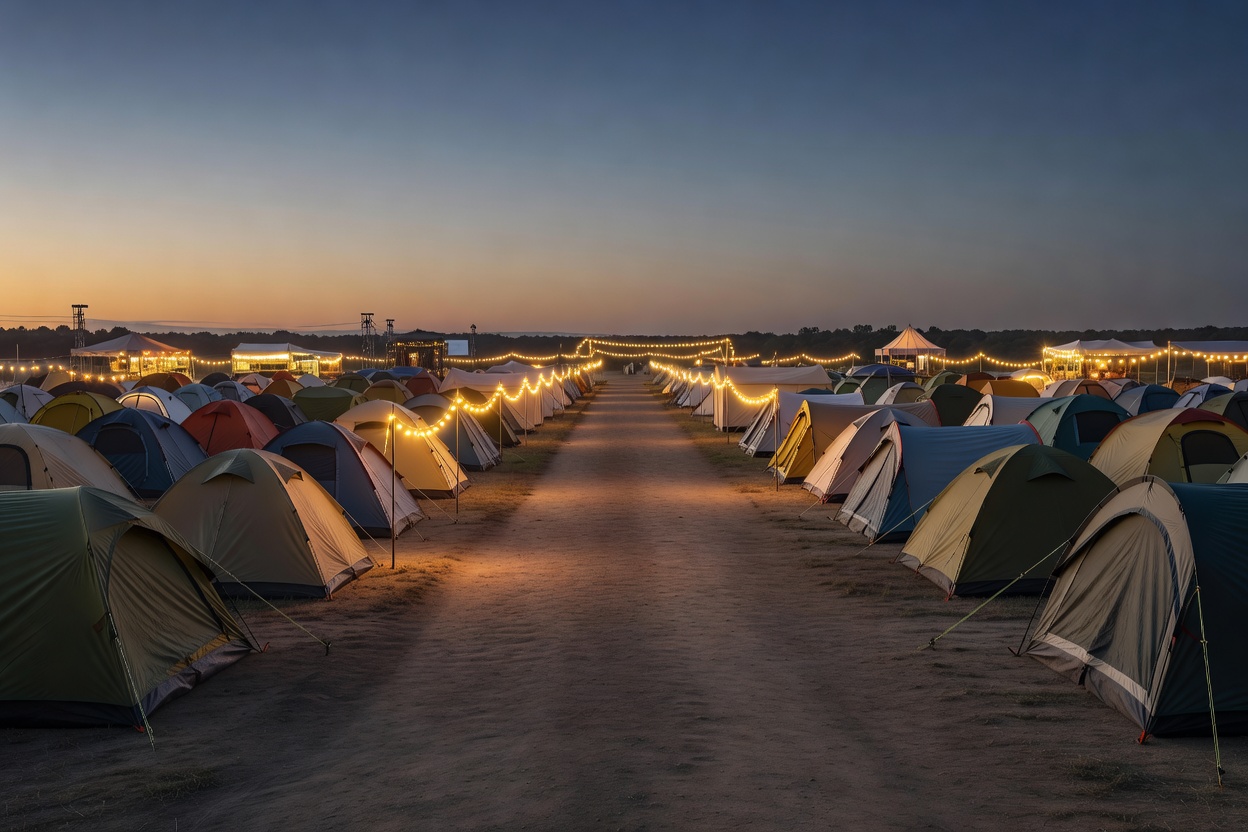
Read the provider’s current cancellation terms, check-in arrangements and accessibility details directly. For camping, review what equipment is permitted, whether the site is connected to the performance area, and what facilities are described for the current event. Avoid assuming quiet hours, power, showers or accessible pitches are provided unless the organiser confirms them.
Arrival, luggage and contingencies
Arrive with a realistic buffer for ticket checks, transfers and finding your accommodation. Keep essential documents, medication, a charged phone and a small weather-ready layer accessible. Before packing equipment, consult venue restrictions; prohibited items can differ. Consider travel insurance that suits your own trip and review what it covers, exclusions and claim requirements rather than treating it as a guarantee.
Budget in categories instead of relying on a single total: long-distance transport, local transfers, accommodation, food and water, entry costs, baggage or equipment needs, travel insurance and a contingency reserve. Compare options on the same basis, including late-night transport and cancellation terms. Avoid making a booking decision on a headline fare alone.
Pre-departure checklist
- Save confirmed addresses and the organiser’s latest arrival instructions.
- Check operator schedules and service alerts shortly before travel.
- Plan the last mile to the venue and the return after late finishes.
- Confirm accommodation location, check-in and cancellation conditions.
- Ask providers about accessibility needs and request specifics in writing.
- Review baggage, venue entry, camping and equipment rules.
- Pack for local weather and keep essential items easy to reach.
- Share a simple meeting and contingency plan with companions.
Short versus flexible stays
A short stay can keep a trip focused and reduce extra nights away, but tight connections leave little room for disruption and sightseeing. A longer visit gives you a recovery day, more room to explore and a better chance of adapting if plans change. The trade-off is additional accommodation and time commitments. Let your group’s energy, route reliability and accessibility needs guide the choice.
Good for
First-time festival travellers, groups coordinating different arrival routes, and anyone who wants a clear overnight and return plan.
What to know
Schedules, routes, prices, availability and access arrangements change. Confirm directly with transport operators, accommodation providers and event organisers; this page contains no live booking data.
Choose a setting using the destination guide, then explore venue layouts and access questions. If you have a question, contact the atlas.